The FBI Just Named the VPN Dozens of Ransomware Groups Share. The Quiet Part Is What That Means.

Updated: Aug 11
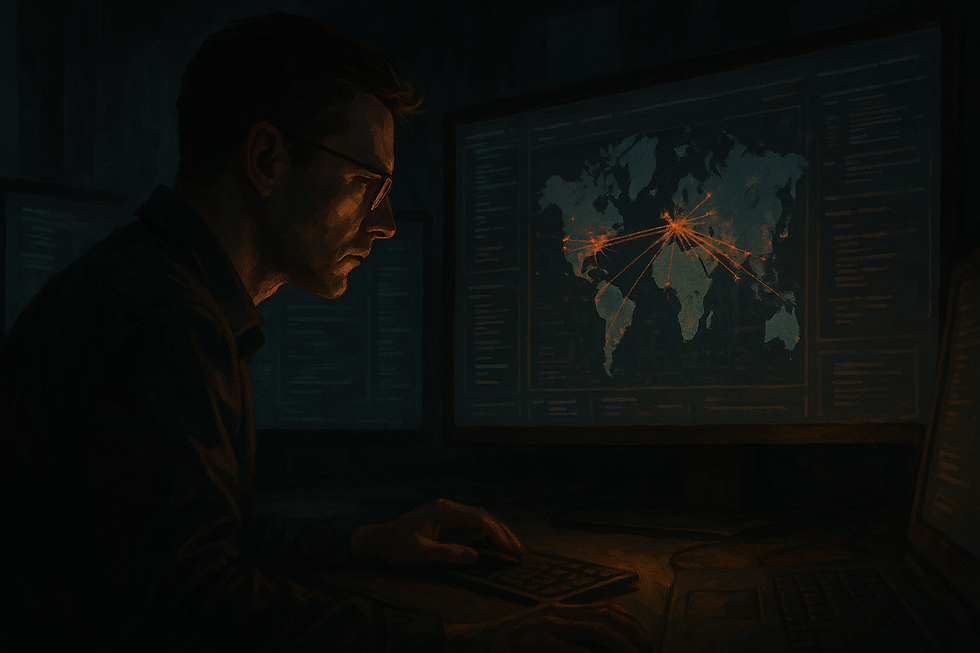
The FBI confirmed this week that dozens of ransomware groups have been routing reconnaissance, initial access tooling, and intrusion traffic through a single commercial VPN service called First VPN. The advisory frames it as a notable operational pattern. The structural read is more interesting than that. When the FBI names a shared piece of adversary infrastructure, the actual disclosure is not that the bad guys use VPNs — that has been true for two decades — but that defenders now have a single chokepoint that ties otherwise-unrelated ransomware brands to one observable surface. That is rare, and it is worth thinking about clearly.
The pyramid: one observable surface, many tenants
DugganUSA's working frame for threat intelligence is that an alert worth acting on has to show depth across three axes — conversion value to a real defender, presence inside a trust network, and sustained adversary pressure. A single-axis signal is a triangle: surface artifact, entertainment only. A signal that hits all three is a pyramid, and First VPN clears the bar without straining. Conversion value: a named vendor with FBI attestation gives any SOC permission to add an egress block, a deny-rule, or a behavioral signature against the IP space without burning their internal credibility budget. Trust network: the source is FBI Cyber Division, not a marketing blog. Adversary pressure: the use is described as ongoing across dozens of crews, which means the infrastructure is not going to be abandoned because one researcher tweeted about it.
The pyramid is real. The interesting question is what shape the adversary side has, and that is where the analysis gets useful.
Shared infrastructure is a soft surface for the adversary side
The same frame we use to think about defender failure modes — hard perimeter holds, soft surfaces bleed — applies in reverse to attackers. A ransomware affiliate operation that builds bespoke egress infrastructure for every campaign has a hard adversary perimeter. A ransomware affiliate operation that shares a commercial VPN with thirty other crews has a soft adversary surface. The convenience of the shared locker room is exactly what makes the whole room observable in one motion. When the FBI publishes a list of nodes, every group renting space in that infrastructure gets correlated against every other group renting space in that infrastructure, whether they cooperate or not.
This is the same dynamic that destroyed Silk Road's reputation system the moment one trusted vendor was compromised: aggregated trust is aggregated risk. Aggregated egress is aggregated exposure. The dozens of crews sharing First VPN did not all sign up to be co-defendants in the same intelligence file, but they are now, and the structural rule of trust-network mechanics says the first crew to get pivoted-on from the shared infrastructure burns visibility for everyone else who is renting from the same provider on the same day.
What our index says, and what it does not
A quick check across our own corpus tells the honest story. We have indicators tied to the major named ransomware brands that the FBI advisory mentions — multi-thousand records across the iocs and adversaries indexes for the active families, with hundreds of millions of decisions logged against the infrastructure they target. What we did not have, before this week, was a dedicated cluster anchored on the shared egress provider. That gap is now the work. The same way we treat vendor blogs as the primary source for nation-state IOC drops during active conflict, we treat federal advisories that name third-party infrastructure as the primary source for the kind of cluster-binding that lets us correlate one crew's tradecraft against another crew's victim list. The First VPN cluster is now its own object in our pipeline, and the IPs the FBI published will live in the IOC feed, the STIX bundle, the OPNsense blocklist, and the CSV pulls that customers route into their SIEMs.
The lesson that travels
Defenders have spent fifteen years being told that attribution is hard because attackers can rent infrastructure anonymously and rotate it cheaply. That has always been true at the level of single nodes. It has never been true at the level of shared infrastructure, because shared infrastructure produces an observable cohabitation graph, and cohabitation graphs survive even when the individual nodes rotate. The FBI naming First VPN is not an arrest, it is not a takedown, and it does not stop the next ransomware affiliate from logging in tomorrow morning. What it does is establish a public, citable, named locker room that every defender now has license to treat as adversarial-by-default. That license is worth more than any single block-list. It changes the burden of proof from defender to adversary, and once that burden flips on a piece of infrastructure, the infrastructure has a useful half-life measured in weeks, not years.
The quiet part is that adversaries have soft surfaces too. We just published one.
How do AI models see YOUR brand?
AIPM has audited 250+ domains. 15 seconds. Free while still in beta.
Was this useful? Thirty seconds, no cookies, no tracking, no third parties, your address hashed and never stored. If the box below does not load, the same question lives at https://analytics.dugganusa.com/nps.html?post=the-fbi-just-named-the-vpn-dozens-of-ransomware-groups-share-the-quiet-part-is-what-that-means


Comments